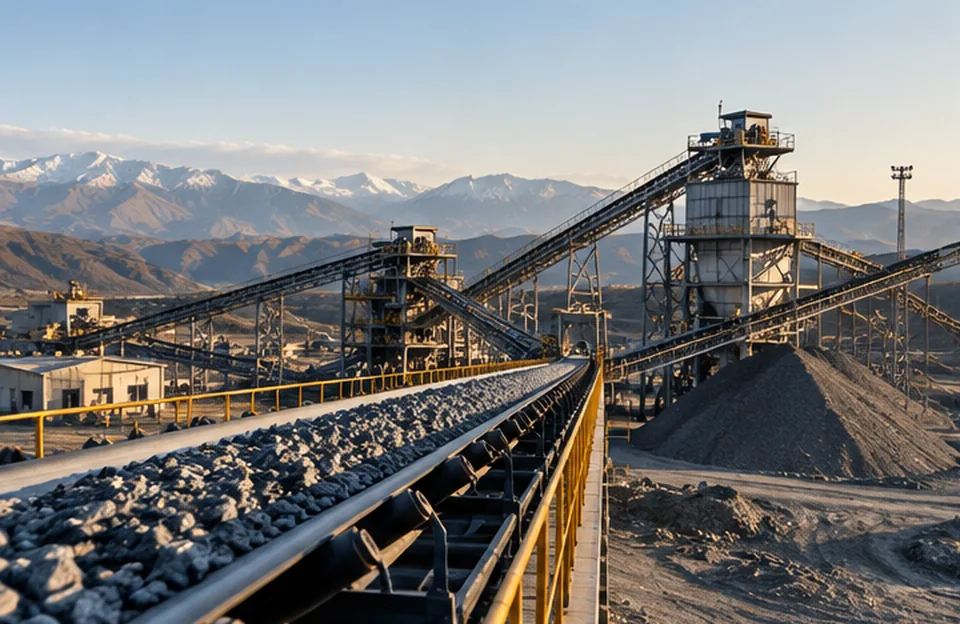
For Central Asian and other Eurasian suppliers, critical-minerals opportunities are often framed around resource endowment. But market access and commercial value also depend on where processing occurs, how supply can be traced, whether products meet buyer specifications and how reliably material can move to downstream manufacturers.
Reserves create potential, not a qualified supply relationship. Buyers and investors need to examine the full chain—from extraction and processing to product specification, logistics, permitting, financing and offtake.
What the EU’s Critical Raw Materials Act sets out
The European Commission describes the Critical Raw Materials Act as a framework to strengthen the EU’s raw-material supply chains and reduce dependency on single-country suppliers. Its 2030 benchmarks for EU domestic capacity include meeting 10% of annual needs through extraction, 40% through processing and 25% through recycling. It also states that no more than 65% of EU annual needs for each strategic raw material, at any relevant processing stage, should come from a single third country. Source: European Commission ↗
These are EU capacity and diversification benchmarks. They are not automatically a new legal quota imposed on an individual foreign supplier, nor do they guarantee demand for any particular deposit, company or commodity. Their relevance is directional: resilience, processing capacity, diversification and supply-chain transparency are explicit policy objectives.
What this can mean for suppliers and investors in Eurasia
Identify extraction, concentration, refining, separation, conversion and end-use stages. Clarify which stage the proposed project can actually deliver.
Resource estimates do not establish that a product meets a buyer’s purity, consistency, volume, reliability or certification needs. Qualification may take time and capital.
Power, water, transport, border processes, reagents, skilled labour and access to processing technology can determine whether local value addition is viable.
Review licenses, export rules, state participation, local-content policy, taxation, foreign-investment conditions and how regulations are implemented in practice.
Be prepared to document origin, ownership, processing locations, environmental and labour standards, chain of custody and potential concentration points.
Three practical implications
First, value capture may matter as much as volume. A project with a credible processing pathway and qualified product may be positioned differently from a project selling unprocessed material, although processing economics and permitting must be assessed case by case.
Second, diversification is not the same as substitutability. A second supplier only reduces risk if its material quality, logistics, contractual reliability and capacity can meet the buyer’s need.
Third, policy alignment is not a substitute for bankability. A project still needs reliable infrastructure, finance, customer commitments, competitive costs and evidence that permissions and construction milestones are achievable.
The analytical task is to trace the commercial route from resource to qualified buyer and identify the dependencies that could interrupt it. That is a stronger basis for market-entry or investment decisions than a reserves headline alone.
This note is an independent synthesis of the public sources listed below. Source-reported facts and projections are attributed to their publishers; the analysis is general and is not a project-specific investment, legal or due-diligence opinion.
Public documents used in this note
- European Critical Raw Materials ActEuropean Commission · Policy framework and 2030 benchmarks